

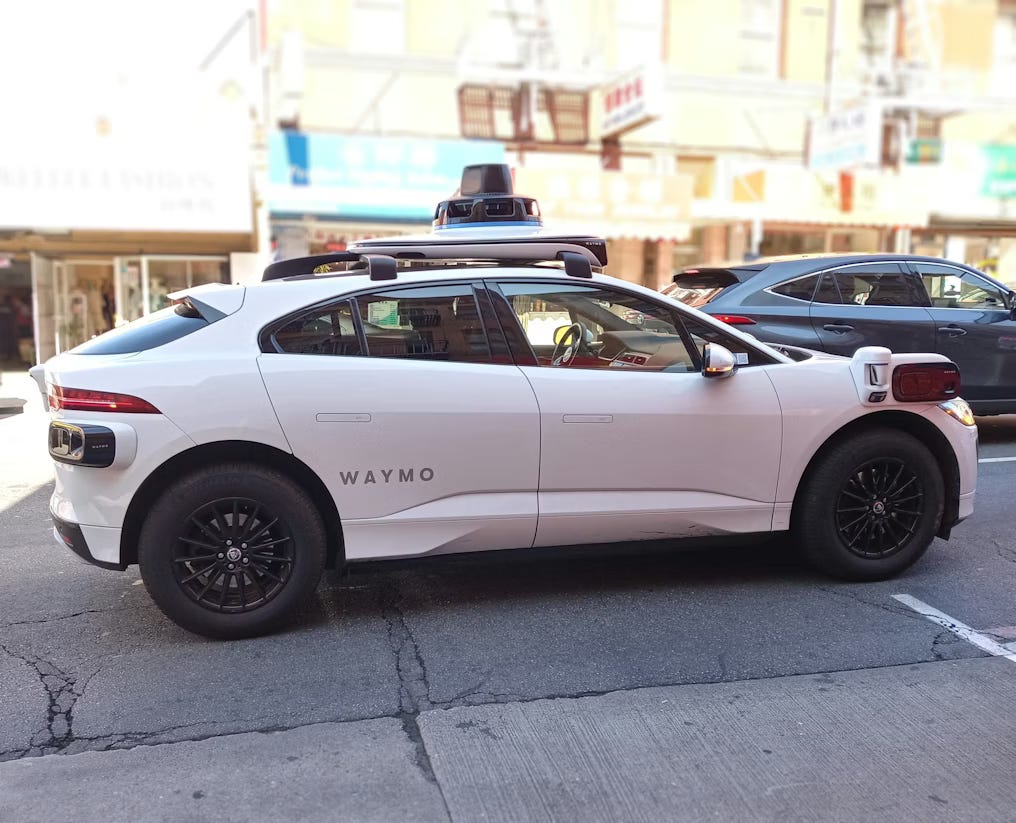
Tiffany Luck is one of the more thoughtful vertical AI investors currently active. In a recent conversation, she described what she is waiting for before committing to the next frontier: the “Waymo moment”: a fully autonomous agentic workflow, hands off the keyboard, the technology doing the work without a human in the loop to catch its errors. When that moment arrives, she will know where to place the bet.
The question she did not ask is the interesting one: who will make it happen?
הון סיכון שונא סיכון
The phrase is a Hebrew pun that does not translate cleanly, which is itself part of the argument. הון סיכון means venture capital: literally, risk capital. שונא סיכון means risk-averse. The joke is that venture capital, the institutional form whose entire rationale is the assumption of risk in pursuit of outsized return, is constitutively risk-averse about the one kind of risk that matters: the risk of operating before the paradigm has a name.
This is not an accusation. It is a structural description.
The VC fiduciary logic requires legibility before commitment. To raise a fund, you need comps — companies that have succeeded in a recognisable way, in a recognisable category, against which your thesis can be evaluated. To deploy a fund, you need a demonstrated market — evidence that the thing you are funding has a precedent that validates the direction. To return a fund, you need an exit, namely a buyer or a public market that assigns a value to the thing you built, using a metric that already exists.
Every link in this chain requires that the paradigm has already crystallised. The market is demonstrated. The category has a name. The metric exists. The buyer understands what they are buying.
Tiffany Luck is waiting for the Waymo moment because the Waymo moment is the point at which the paradigm crystallises: when autonomous agentic workflow becomes a legible category with demonstrated economics and recognisable comps. At that point, the VC logic becomes applicable. Before that point, it does not.
The question of who paves the road to the Waymo moment is not a question the VC structure is designed to ask.
Who Paves the Road
The road-paving work has a specific character. It involves operating in the pre-legibility zone — deploying technology against named operational constraints before the category exists, before the comps are available, before the metric that will eventually measure success has been invented. The people who do this work do not know, when they begin, whether they are building the Waymo moment or one of the many failed attempts that will be forgotten when the moment finally arrives.
This is the actual risk. Not the risk of a known bet going wrong — that is the risk the VC model prices efficiently. The actual risk is operating without the information that would make the bet legible: without a category, without comps, without a metric, without certainty that the thing you are building is the thing that the paradigm, when it crystallises, will reward.
The first-wave digital ventures were largely spared this risk. They were building digital twins of established physical businesses, inheriting the demand signal, the comps, and the metric from the physical original. The VC logic was calibrated to this world: the paradigm was legible because the physical precedent was legible. The risk was execution risk, not paradigm risk.
The ventures that will enable the Waymo moment, and I’m talking about the ones that are currently deploying agentic workflow against named operational constraints in named enterprises, discovering through iterative deployment what the technology can and cannot do in conditions that no laboratory can replicate — are taking paradigm risk. They are paving the road whilst walking it.
The VC structure cannot fund this work. Not because VC investors are insufficiently courageous, but because the fiduciary logic does not permit it. You cannot raise a fund on “this will work when the paradigm shifts.” You raise a fund on comps.
The Capital Structure That Can
The road-paving work requires a capital structure that can replace the VC’s legibility requirement with something else. The VC needs a category. The road-paver needs a different anchor: a named enterprise with a named operational problem and a measurable outcome at each step.
The named enterprise does what the category cannot: it supplies a falsification criterion. Did the metric move after the recommendation? That question is what makes iterative deployment progressive rather than merely repetitive. The venture is not running a lottery, hoping to guess correctly. It is running a research programme, with a fixed referent and a bidirectional review at each cycle: were the actions unsatisfactory, or was the theory of the problem wrong?
This is why the demand-first venture builder is a PE play, not a VC play. Private equity can tolerate the ambiguity of road-paving because the named corporate relationship — and the outcome loop it enables — replaces the VC’s legibility requirement. The named buyer’s problem is the category. The measurable outcome is the comp. The iterative deployment is the track record.
The PE structure has a further advantage that is underappreciated. The VC model is designed for paradigm exploitation. It means entering a crystallised category at scale and pricing the risk of execution against a known template. The PE model, at its best, is designed for operational transformation: which means acquiring or building businesses with embedded operational reality and improving the economics through structural change. The road-paving work is closer to operational transformation than paradigm exploitation. The PE institutional logic is, in principle, better suited to it.
In principle. The current PE model has its own version of the legibility problem: it requires demonstrated financial performance, a known exit mechanism, and comps for the multiple. The innovation required is not a different capital structure in the abstract — it is a PE vehicle that accepts the named operational problem as the substitute for the demonstrated category, and the measurable outcome loop as the substitute for the historical financial track record.
What the Waymo Moment Actually Requires
The deeper problem with Tiffany Luck’s position (and she is not alone; it is the default position of the VC industry) is that it makes the Waymo moment a precondition for investment rather than a consequence of investment.
Waymo did not arrive by waiting. It arrived because a named enterprise — Google, then Alphabet — decided to fund the road-paving work before the category existed, against a named operational constraint (autonomous urban navigation), with the patience to iterate through the pre-legibility zone without requiring comps or a demonstrated market.
The road existed because someone walked it. The moment did not precede the walking. It was produced by it.
The ventures that are currently deploying agentic workflow against named operational constraints in named enterprises are doing the walking. They are not waiting for the paradigm to crystallise. They are the mechanism by which it crystallises, but for a named enterprise, in a named domain, with a measurable outcome at each step.
The VC industry will arrive when the paradigm is legible. It will price the entry as if it had taken the risk.
The road-paving work will have been done by someone else, on a different capital structure, with a different theory of what value creation in the pre-legibility zone actually requires.
הון סיכון שונא סיכון. The pun works because it is true.